
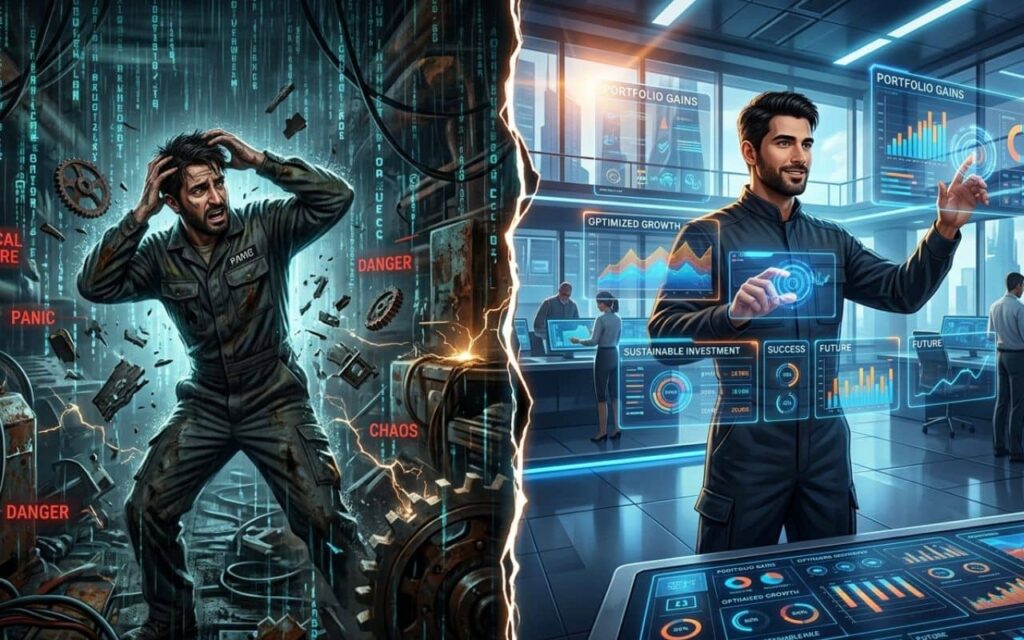
In recent years, the term “massive reskilling” has become increasingly common in boardrooms, human resources (HR) presentations, and policy discussions. Many companies across industries are racing to allocate budgets for upskilling programs—ranging from digital tools and data literacy to artificial intelligence (AI) and new ways of working.
At first glance, this move appears necessary and forward-thinking. However, a closer look raises a more complex question: is massive reskilling truly a smart long-term investment, or merely a hasty response driven by anxiety?
The answer, as is often the case in HR strategy, is not black and white. Reskilling can be either—or even both—depending on the intent, execution, and specific context of each organization.
Why Can Reskilling Be Considered a Strategic Investment?
From a strategic perspective, reskilling is no longer optional—it has become essential. The world of work is evolving faster than traditional career paths can keep pace with. Automation, AI, and digital platforms are reshaping nearly every function, from finance and marketing to operations and HR. While many traditional roles are gradually disappearing, new ones are continuously emerging.
Organizations that treat reskilling as a long-term investment typically share several key characteristics.
First, they align training initiatives with business strategy. Rather than offering generic programs, they identify the critical skills required to remain competitive. For example, a manufacturing company transitioning to Industry 4.0 may prioritize capabilities such as data analytics, robotics maintenance, and digital supply chain management. In this case, upskilling becomes a tool for executing strategy.
Second, they adopt a systematic approach. Reskilling is integrated into broader talent management processes, including workforce planning, performance management, career development, and succession planning. Employees are not simply “sent to training,” but guided through structured learning journeys tied to clear career pathways. This helps avoid a common pitfall: training without direction.
Third, they view employees as long-term assets rather than replaceable resources. Investing in upskilling signals trust and commitment, reinforcing the idea that employees can continue to grow within the organization. This, in turn, enhances engagement, loyalty, and retention—especially valuable in a competitive talent market.
From this perspective, large-scale reskilling is not merely a cost—it is a strategic investment in organizational resilience and adaptability.
When Does Reskilling Become a Panic Response?
Not all reskilling initiatives are created equal. In many organizations, the sudden push for large-scale training is driven more by anxiety than by a well-defined strategy.
Several factors contribute to this reactive approach.
One is overenthusiasm for emerging technologies. The rapid rise of AI, for instance, can create a sense of urgency—sometimes bordering on panic. Leaders may rush to implement large-scale training programs without a clear roadmap. Employees are enrolled in courses on AI, machine learning, or data science without understanding how these skills apply to their daily roles.
Another factor is external pressure. When competitors launch digital transformation initiatives, promote the idea of a “future-ready workforce,” or when governments introduce national reskilling agendas, organizations may feel compelled to follow suit—even if they are not internally prepared. In such cases, reskilling becomes symbolic: a way to appear progressive without delivering real progress.
A further driver is long-neglected internal skill gaps. When organizations delay investment in learning and development, these gaps gradually widen. Eventually, when the gap becomes too significant to ignore, companies react by launching large-scale training programs in haste. At this point, reskilling shifts from a proactive strategy to a reactive fix.
The consequences of panic-driven reskilling are predictable.
Programs often lack relevance, resulting in low engagement. Employees may complete training modules but struggle to apply what they have learned. Learning fatigue can also emerge, as employees feel overwhelmed by unfocused or excessive training. In some cases, organizations experience “skill inflation,” where many employees possess superficial knowledge, but few develop the deep expertise needed for real impact.
In such situations, massive reskilling becomes an expensive initiative with limited returns.
The Execution Gap: When Good Intentions Fall Short
Many upskilling initiatives fail at the execution stage—regardless of whether they originate from strategy or panic. This is where organizations must be particularly deliberate.
One common issue is the disconnect between learning and work. Training is often delivered through online platforms or classroom settings, without being integrated into day-to-day responsibilities.
Another challenge is limited managerial involvement. Managers play a critical role in reinforcing learning, assigning stretch tasks, and guiding employees. However, in many organizations, skill development is still seen as solely the responsibility of HR or training teams, which limits its overall impact.
Measuring success is also problematic. Organizations often focus on input metrics—such as training hours, completion rates, or participation levels—rather than outcomes. The real question is not how many employees have been trained, but how many can apply new skills to improve their performance.
Finally, mindset plays a crucial role. Skill development requires a shift from a static to a dynamic view of capabilities. Employees must embrace lifelong learning, while organizations need to create psychologically safe environments that encourage experimentation—and allow room for failure. Without this cultural foundation, even well-designed programs are unlikely to succeed.
From Panic to Purpose: A More Disciplined Approach
To move from reactive reskilling to strategic capability building, organizations need a more disciplined approach.
The first step is defining clear priorities. Which skills are truly critical for the future? This requires thoughtful workforce planning and scenario analysis—not simply following trends.
Next, organizations must focus their efforts. Not all employees need the same type of reskilling at the same time. Segmenting the workforce based on roles, potential, and strategic importance enables more targeted interventions.
Integration is equally important. Learning must be embedded into daily work through project-based assignments, cross-functional rotations, or on-the-job experiences. The goal is to translate knowledge into behavior.
Leadership commitment is essential. Leaders must support skill development not only through budgets, but also through active involvement—participating in learning, mentoring employees, and modeling a growth mindset.
Finally, organizations must rethink how they measure return on investment. The impact of reskilling is not always immediate or easily quantifiable. However, over time, it strengthens organizational agility, innovation capacity, and resilience in the face of disruption.