
Many businesses fail not because their products are mediocre, but because their leaders fail to see the hidden opportunities behind those products.
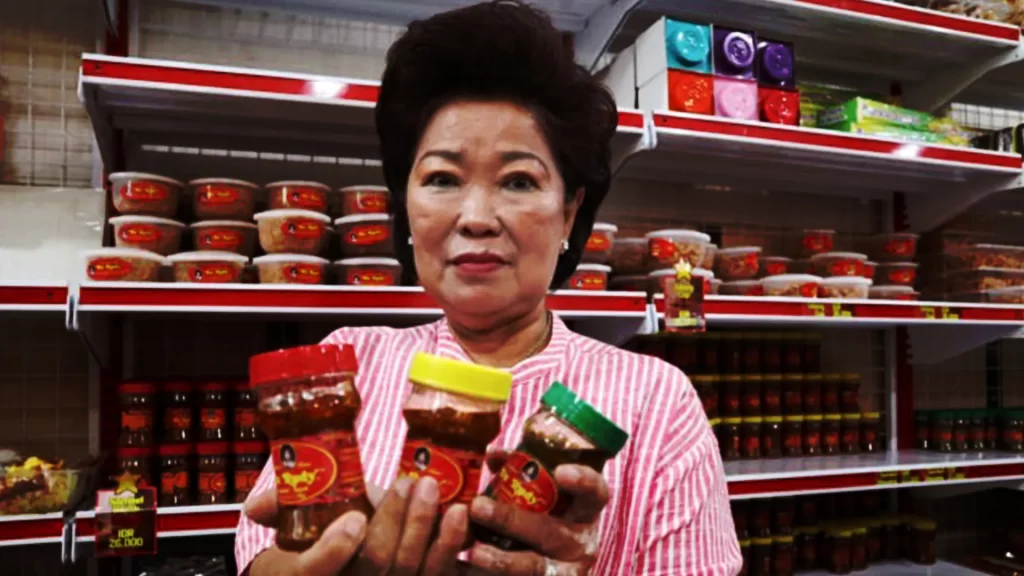
Many people visiting Surabaya bring home Sambal Bu Rudy as a souvenir. For decades, this chili sauce with its yellow lid has been an icon of the city, even becoming part of Surabaya’s culinary identity. However, if we trace the history of Bu Rudy’s business, we’ll discover an interesting fact: her success didn’t start with the sambal.
Bu Rudy began her business by selling nasi pecel, then nasi udang. The onion sambal was initially just a side dish. Yet, it was precisely that side dish that later became the star of the show. This phenomenon offers a leadership lesson far more important than just the story of a successful entrepreneur.
Great Leaders Don’t Always Know Their Best Product
Many organizations spend years drafting business plans, making market projections, and discussing flagship products. However, the market often has its own preferences.
Bu Rudy didn’t force customers to love the product she thought was the best. Instead, she let customers “choose” which product they liked best. This is what is known in the world of strategy as an “emergent strategy”, a strategy that evolves through learning from the market, not solely from the boardroom.
Crisis as a Catalyst for Building a New Identity
Before becoming known as a culinary entrepreneur, Bu Rudy ran a shoe business for more than two decades. A devastating fire brought that business to an end.
Many people might spend years lamenting that loss. However, Bu Rudy refused to do so. She did not try to revive her old business. She did not look back to the past but gazed toward the future.
Striving to recover from a crisis is indeed instinctive. However, resilient individuals do more than that: they use the crisis as momentum to undertake transformation. This is where true leadership lies: not merely the ability to overcome failure, but the courage to leave the past behind when the future offers brighter opportunities.
Success Is Built on Focus, Not Greed
Many business owners believe that the more products they sell, the greater their chances of making a profit. Mrs. Rudy took a different path. Nasi pecel evolved into nasi udang. Nasi udang gave rise to sambal. Sambal then evolved into a souvenir center. Everything remains within a single ecosystem that reinforces one another.
This approach reflects strategic discipline. Instead of pursuing excessive diversification, Bu Rudy deepens her brand’s identity. In the modern business world, focus often becomes a competitive advantage that is difficult to replicate.
Always Close to Customers
Although her business has grown and now employs dozens of staff members, Bu Rudy still goes down to the kitchen to ensure food quality. At first glance, this might seem like the habit of a perfectionist business owner. In reality, however, there is a deeper leadership philosophy at play. The higher one’s position in an organization, the greater the risk of losing touch with customer realities. Final decisions end up being based solely on reports, charts, and presentations.
Ms. Rudy chooses to maintain a direct connection with the primary source of her business’s reputation: product quality. In the digital age, when many leaders rely on dashboards and performance metrics, staying close to customers has become an increasingly rare competitive advantage.
From Building a Business to Building an Ecosystem
The most compelling lesson emerged during the pandemic. Instead of merely saving her own business, Ms. Rudy established a souvenir center by inviting Surabaya’s MSMEs to grow together. This is a shift in a leader’s mindset. In the early stages, an entrepreneur’s goal is to build their business. In the next stage, a leader’s goal is to build an ecosystem. A great company doesn’t just generate profits for itself; it also creates opportunities for others to thrive. It is this paradigm that distinguishes ordinary businesses from those that have a sustainable social and economic impact.
Succession Doesn’t Begin When the Founder Retires
One of the biggest challenges for family businesses is succession. Many new businesses only start discussing succession when the founder is no longer able to lead. It seems Bu Rudy understands this. From a young age, her children have witnessed firsthand their mother’s struggle to build the business. What she has passed down is not merely stock ownership, but also values, a work ethic, and a philosophy of customer service.
This is the true form of succession. Family businesses that survive across generations almost always succeed in transferring their culture, not just their assets.