
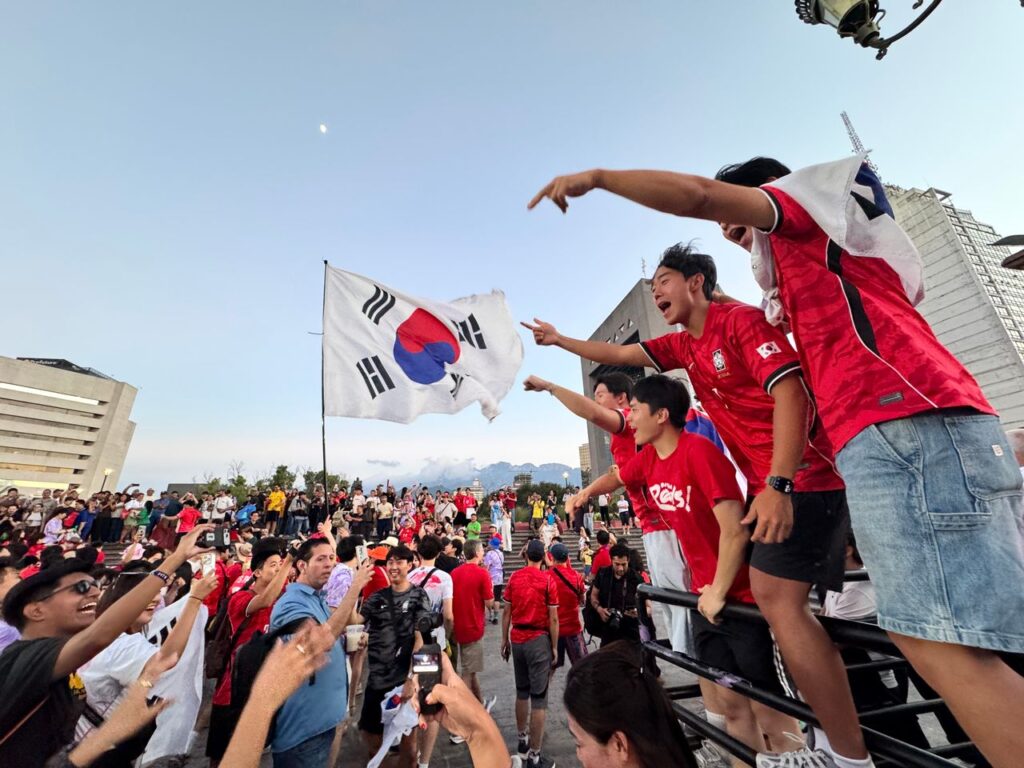
When an organization fails, poor decisions are often blamed as the cause. This isn’t entirely wrong. In the world of soccer, public attention usually focuses on the coach’s strategy, player substitutions, or tactical decisions deemed to be mistakes. However, upon closer examination, these are often merely symptoms. The root of the problem lies much deeper: in the way the organization selects its leaders.
The South Korean national team’s failure at the 2026 World Cup is a compelling example. After being eliminated in the group stage, public attention wasn’t limited to coach Hong Myung-bo’s controversial decision, such as benching Son Heung-min or substituting Kim Min-jae while the team was trailing. The wave of criticism escalated into petitions calling for his dismissal, death threats, and ultimately led to Hong’s resignation.
However, the crux of this story lies not in the drama on the field, but in what came to light after South Korea’s elimination. South Korean President Lee Jae Myung called for a thorough investigation into the causes of the team’s failure and issued a statement that should strike a chord with every organizational leader:
“When loyalty and group interests are prioritized over competence, and incompetent people are placed in leadership positions, results like this are almost inevitable.”
This statement is relevant not only in the world of soccer but also in organizational leadership, regardless of the organization.
Far Deeper Than Just One Wrong Move
Many organizations around the world have a bad habit: looking for a scapegoat when results fall short of targets. The CEO is accused of choosing the wrong strategy. The Head of Marketing is deemed to have failed to understand the market. The Project Manager is blamed for a project that failed to be completed on time. Yet history shows that major organizational failures rarely stem from a single wrong decision.
Failure is the result of a series of small decisions that accumulate over the years, especially decisions about who is fit to lead. The case of the South Korean national soccer team proves this. As criticism rains down on the coach, the public’s memory returns to an old controversy: the appointment process, which was marred by procedural doubts, long before the competition even began. In short, the real issue isn’t what the coach does on the field, but how the organization ended up choosing him in the first place.
Every organization needs loyalty. However, loyalty cannot and must not ever supplant competence. This is where many organizations falter. Strategic positions are given to those closest to and most indebted to the leader personally (even if they lack competence). Crucial decisions are more often determined by informal networks than through data-driven evaluations. In the short term, such practices do pay off. Internal conflict is minimal. Mutual trust among members is maintained.
However, in the long run, the organization loses its ability to make accurate decisions. Leaders who rise to power based on proximity not capability tend to avoid challenges, are averse to criticism, and are more preoccupied with securing their own positions than with advancing the organization.
This is why entities that appear solid and stable often collapse in an instant when a crisis strikes. The crisis does not create that fragility; it merely exposes it in a merciless way.
The public is debating Hong Myung-bo’s decision to bench Son Heung-min. Was it wrong? Perhaps. Perhaps not. However, that is not the root of the problem.
The more important question is why someone was able to reach a position that gave them the authority to make such a significant decision? Who selected them? How were they selected?
In modern organizations, the quality of an individual’s decisions cannot be separated from the quality of the system surrounding them. When recruitment and selection are riddled with flaws, performance evaluations are biased, organizational culture punishes dissent, and oversight functions are merely ceremonial, bad decisions are no longer a possibility—they are an inevitability. The emergence of such decisions is likely only a matter of time. Therefore, healthy organizations don’t just ask, “What is the final outcome?” They also dig deeper: “How was this decision made?”
Meritocracy Is More Than Just a Slogan
Many organizations claim to uphold meritocracy. However, the true test lies not in the slogan, but in the organization’s behavior when it comes to selecting leaders. Is the selection process conducted openly and transparently? Are candidates evaluated based on relevant achievements and competencies? Are there mechanisms in place that allow the best candidate to emerge, even if they are not the closest to those in strategic positions?
These questions are becoming increasingly relevant amid such rapid change. Personal connections can no longer be the go-to tool for competing.
Accountability Starts at the Top
Hong Myung-bo has finally resigned. This decision shows that a leader cannot escape responsibility for his leadership.
However, simply replacing the leader is not enough. In many organizations, problems are often considered solved merely by replacing the leader. This is similar to the world of soccer: a team will succeed after changing coaches. In reality, the problem lies in the still-shaky development system.
As long as the governance system remains unchanged, selection processes remain biased, and the organizational culture doesn’t change, any leader—no matter how competent—will face the same problems. Replacing a leader without fixing the system is like replacing a ship’s captain without fixing the compass.
Collapse Doesn’t Happen Overnight
From the crisis that befell the South Korean national team, there is an important lesson we can learn. Defeat doesn’t begin when the match starts, but long before that. Defeat begins when the principles of good governance are no longer taken seriously. The match becomes an arena where the consequences of all that neglect are revealed in a painful way.
The same applies to companies. A declining market share, the departure of top talent, and a deteriorating work environment are merely symptoms, not the causes of a crisis. A leader’s task is to build a system that ensures the best people are willing to join the organization, especially to fill strategic positions.