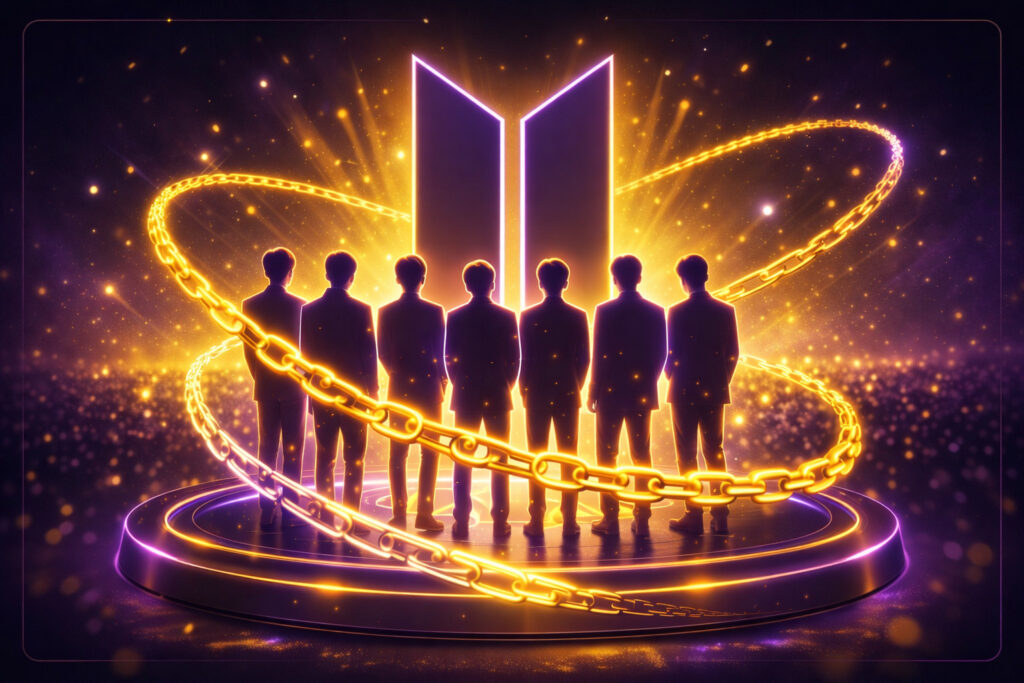
After a long wait of nearly four years, 2026 will finally witness the return of global icons BTS in their full lineup. Their return is not just about new music, but an emotional reunion that has been anticipated since all members completed their mandatory military service in mid-2025.
The first hint came on New Year’s Eve 2026. Through a live broadcast on Weverse, the seven members of BTS greeted ARMY with a unified message: “The year of our reunion has arrived.” RM, the group’s leader, affirmed that 2026 would be “The Year of BTS,” a promise to fulfill fans’ longing after a long hiatus since the album Proof (2022).
On March 20, 2026, BTS is scheduled to release their fifth studio album titled “ARIRANG.” The title carries deep meaning, drawing inspiration from Korea’s most iconic folk song, the album symbolizes their identity, struggles, and achievements, and their “return” to their Korean cultural roots after conquering the world.
The day after the album’s release, specifically on March 21, 2026, Seoul will become the center of global attention. BTS will hold a free concert titled BTS THE COMEBACK LIVE | ARIRANG at Gwanghwamun Square, a historic location in the heart of South Korea’s capital. This moment is not just for local audiences; Netflix will exclusively stream the concert live worldwide, ensuring that ARMY around the world can take part in the moment.
The highlight of this comeback is a massive world tour kicking off on April 9, 2026, at Goyang Stadium. The tour is planned on a massive scale, encompassing over 80 shows across 34 regions worldwide. For fans in Indonesia, BTS is scheduled to perform in Jakarta on December 26–27, 2026
The BTS phenomenon highlights one interesting idea: the story of a “comeback” always holds a unique allure, even within the entertainment industry. There’s a sense of curiosity, nostalgia, and hope regarding whether the legend can still shine as brightly as before.
So, can something similar happen in the business world? Can a company that’s currently struggling rise again?
Companies Also Have a Life Cycle
In management theory, organizations are often described as having life cycles. They are born, grow, reach the peak of their success, and then at a certain point begin to face challenges. Some manage to survive and continue to grow, while many others gradually fade away.
Many factors can trigger decline: technological changes, the emergence of new competitors, strategic errors, or a rigid corporate culture. Markets that once favored a company can suddenly become highly competitive.
However, history shows that decline does not always spell doom. Some companies have actually managed with business transformation to bounce back and find new paths to growth.
New Leader, New Hope
A company’s resurgence often begins with leadership. A new leader typically brings a fresh perspective to problem-solving.
In times of crisis, leaders must honestly assess the situation. It is not merely a minor challenge, but a serious problem requiring serious handling. Without honesty, a company can become trapped in a comfort zone and resist change.
Leaders driving change must also be able to craft a compelling narrative for the future. Employees, investors, and customers alike need assurance that the company still has a clear direction. A strong vision serves as the primary fuel for transformation.
New Strategies for a Changing Era
A comeback requires companies to rethink their strategies. The market never stops evolving. While a company is reorganizing, competitors continue to innovate to capture market share.
Therefore, a comeback demands the courage to abandon old habits. It is not enough—and often impossible—to rely on past success formulas.
Some companies choose to enter new markets. Others completely overhaul their business models. Many also leverage technology to make their products and services more relevant to today’s needs. The point is, a comeback isn’t about returning to the past, but about creating a different future.
Rebuilding the Organization’s Spirit
Strategy alone isn’t enough. Corporate culture is another decisive factor. Many organizations fail to change because their internal culture is too rigid. Layered bureaucracy, departmental silos, and complacency slow them down.
That’s why cultural transformation is often a vital part of the revival process. Companies seeking to rebound typically reignite their entrepreneurial spirit, encourage cross-functional collaboration, accelerate decision-making, and make room for new ideas. With a more open culture, companies can respond to change more nimbly.
Trust: The Foundation That Must Be Restored
A comeback means nothing without trust. When a company begins to falter, the trust of various stakeholders also erodes.
Employees begin to doubt, investors become cautious, and customers start looking for alternatives. Therefore, a turnaround is not just about strategy, but also about psychology. Rebuilding the trust of stakeholders is a major challenge.
Not All Companies Succeed in Their Comeback
Although comeback stories are always inspiring, not all companies manage to pull through. Many ultimately disappear because they were too slow to adapt.
Ultimately, a comeback is the true test of an organization’s resilience. It requires strong leadership, the courage to take risks, and a flexible culture capable of adapting to change.
There is no guarantee that every company can make a comeback. But history proves that those who can learn from failure are often able to rise stronger than before.
Just like inspiring stories in many fields, every comeback begins with a simple belief: the future can still be reshaped.
Related Posts:
When Organizational Structure Is No Longer Relevant to Strategy
Change Fatigue: When Too Many Initiatives for Change Cause Exhaustion
Organizational Culture Clashes in Mergers and Acquisitions
Microculture: The Secret Behind Adaptive Organizational Culture
The Rise of Multi-Career Professionals in the Workplace: When Employees Have More Than One Job